
PUSUN PT-MAX C vs Spinfire Pro 2: Tennis Ball Machine Comparison
Choosing the right tennis ball machine can make a major difference to the quality of your solo training. Two models...
By

Squash Ball Feeding Machines. If you want to improve your squash game through consistent, independent practice, a squash ball machine can be a valuable training partner. Unlike a human feeder, a ball machine can deliver repeatable shots at a controlled speed, frequency, angle, and feed pattern, allowing you to focus on technique, movement, timing, and fitness.
But with so many squash ball feeding machines available, choosing the right one can be difficult. Should you prioritise maximum ball speed? Is adjustable feed frequency important? How much does ball capacity matter? And what type of feed options should you look for?
This squash ball machine buying guide explains the most important features to consider before buying, with a focus on speed, frequency, feed options, portability, battery life, and training versatility. Squash Ball Feeding Machines
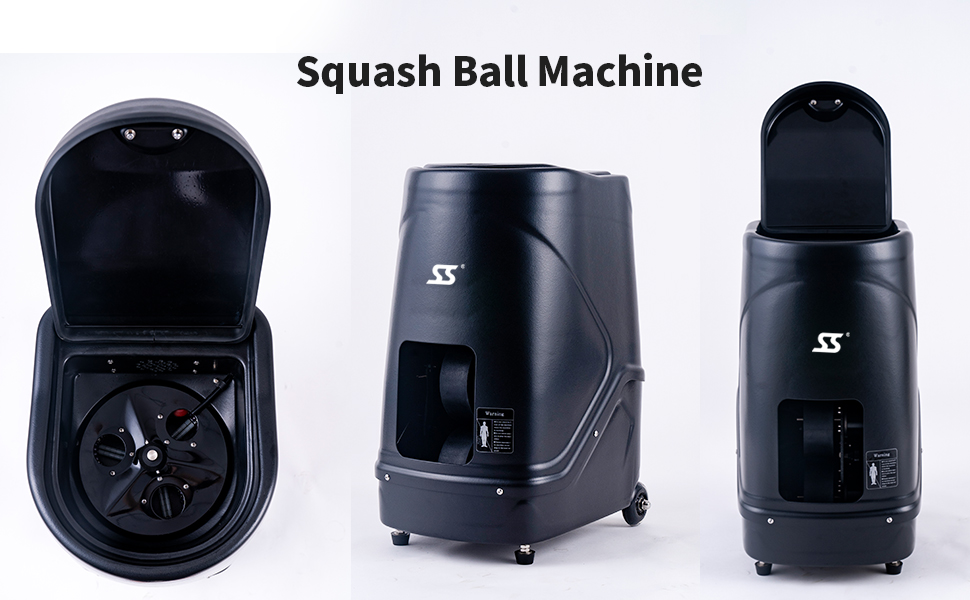
A squash ball machine is an automated training device designed to repeatedly feed squash balls to a player. Depending on the model, it can deliver balls at different speeds, intervals, trajectories, and angles.
Instead of relying on another player or coach to feed balls, you can practise specific shots independently. This makes a squash ball feeding machine useful for beginners, intermediate players, advanced competitors, coaches, and fitness-focused players.
A good machine can help you practise:
The biggest advantage is consistency. You can repeat the same type of shot many times and then progressively increase the difficulty.
One of the biggest challenges in squash training is getting enough quality repetition. A training partner may not always be available, while a coach may have limited time.
A squash ball machine gives you an additional way to train independently.
A machine can repeatedly feed balls using the settings you select. This allows you to concentrate on your swing, footwork, preparation, and recovery rather than worrying about whether the next ball will arrive correctly.
You can practise without waiting for a partner. This is particularly useful for players who have limited access to regular training partners.
Improving a stroke requires repetition. A ball machine can deliver dozens or hundreds of balls during a session, depending on its capacity.
As your skills improve, you can increase speed, change the feed interval, adjust angles, or introduce more challenging shot patterns.
Instead of spending a large part of your session collecting balls or waiting for feeds, you can structure focused drills around a particular skill.
Speed is one of the most important specifications to consider when buying a squash ball machine.
However, faster is not always better.
A beginner may benefit more from a machine that provides slow, controlled feeds than from a high-speed model designed for advanced players. Squash Ball Feeding Machines
Ball speed affects how much time you have to react and prepare for your shot.
Lower speeds can be useful for:
Higher speeds are useful for:
The ideal machine should therefore offer a wide speed adjustment range, rather than simply having the highest maximum speed.
Consider your current playing level.
Look for a machine with a relatively gentle minimum speed and smooth adjustment. Being able to slow the feed down gives you enough time to prepare your strokes correctly.
An intermediate player should look for a machine with a broader speed range. This allows you to practise technical shots at moderate speeds and gradually introduce faster feeds.
Advanced squash players should consider a machine capable of delivering challenging, rapid feeds. Fast settings can be useful for reaction training, volleys, defensive situations, and match-style drills.
Buying tip: Don’t choose a machine solely because its advertised maximum speed is impressive. The minimum speed, adjustment range, and consistency are equally important.
Feed frequency refers to how often the machine launches a ball.
For example, a machine may allow you to adjust the interval between feeds so that you receive a ball every few seconds or at a much faster rate.
This feature is extremely important because it controls the rhythm and intensity of your training.
A slower interval gives you more time to:
This is ideal for beginners and technical training.
A medium interval can create a more realistic training rhythm. It is useful for practising repeated drives, movement patterns, and combinations. Squash Ball Feeding Machines
Fast feeding can dramatically increase training intensity. It is particularly useful for:
The best squash ball machine should ideally offer adjustable feed frequency so that you can change the intensity as your ability improves.
Speed and frequency are important, but the available feed options can determine how versatile a machine is.
Different machines provide different combinations of settings.
A basic machine may send balls toward a relatively consistent area.
This is useful for repetitive stroke practice because you can concentrate on technique without having to adjust your movement constantly.
An adjustable launch angle allows you to change the trajectory and landing position of the ball.
This can help you practise different shot situations and make your training more varied.
Some machines can move the feed from side to side.
This forces you to move between the forehand and backhand sides rather than remaining stationary.
Horizontal oscillation can be particularly useful for practising:
Vertical adjustment changes the height or trajectory of the feed.
This can help simulate different types of balls and create more challenging drills.
Some advanced machines offer randomised or variable feeding.
Instead of knowing exactly where the next ball will arrive, you have to react to changing feeds. This can make solo practice more dynamic and closer to unpredictable match situations.
Another important consideration is ball capacity.
A larger hopper means you can train for longer before stopping to reload the machine.
Typical machines may have different capacities, so consider how long your training sessions normally last.
A smaller capacity can be perfectly adequate for:
A higher-capacity machine is useful for:
Remember that a larger capacity can also increase the machine’s size and weight. Squash Ball Feeding Machines
If you plan to use your squash ball feeder at different courts, battery life becomes particularly important.
A portable machine with a rechargeable battery allows you to train without needing a nearby power outlet.
When comparing models, check:
For regular training, a machine with enough battery life for a complete session is much more convenient.
A powerful machine isn’t very useful if it is difficult to transport.
If you plan to carry your machine between home, the squash club, and different courts, consider its:
A lightweight portable squash ball machine can be easier to transport, while larger machines may offer greater capacity and more advanced features.
The best option depends on how you intend to use it.
Modern ball machines may include remote controls or smartphone connectivity.
These features can make training more convenient because you don’t necessarily need to walk over to the machine every time you want to change a setting.
Depending on the model, controls may allow you to adjust:
If you prefer structured training, programmable settings can also help you create repeatable drills.
Once you have selected a machine, the next step is using it effectively.
Set the machine to a moderate speed and consistent feed.
Focus on:
Repeat for several sets before increasing the speed.
Use the same approach for your backhand.
Start slowly and prioritise accuracy rather than power.
If your machine offers horizontal oscillation, use it to alternate between the two sides of the court.
Focus on moving efficiently and recovering after every shot.
Increase the feed frequency and speed.
Try to maintain good technique while responding quickly to each ball.
Alternate between periods of fast feeding and recovery.
For example, you could perform a high-intensity sequence followed by a short rest before repeating the drill.
This can combine technical training with conditioning. Squash Ball Feeding Machines
The price of a squash ball machine can vary significantly depending on its features, construction, capacity, battery, and control options.
Instead of choosing purely based on price, consider the features you actually need.
Suitable for players who want basic solo training and consistent ball feeding.
Often provide more adjustment options, better portability, improved battery life, and greater training versatility.
Designed for serious players, coaches, and clubs that require more sophisticated feeding patterns, higher performance, and extensive adjustment options.
A more expensive machine isn’t automatically the best choice. The right model is the one that provides the settings you need for your training goals. Squash Ball Feeding Machines
A very high maximum speed sounds attractive, but you may rarely use it. A broad and practical speed range is often more valuable.
A machine with limited interval adjustment can restrict your training options.
Check the machine’s weight and dimensions before purchasing, particularly if you will transport it regularly.
Make sure the battery can handle your typical session length.
Advanced programming and connectivity can be useful, but beginners may not need every available feature.
The cheapest machine may not provide the consistency, durability, or adjustment range you need.
Before purchasing, consider these key questions:
For players who want more independent practice, a squash ball machine can be a worthwhile investment.
The biggest advantage isn’t simply the ability to fire balls at high speeds. It’s the ability to control your training environment.
You can start with slower feeds, focus on technique, increase the feed frequency, introduce movement, and eventually practise high-speed reaction drills. Squash Ball Feeding Machines
This makes an adjustable squash ball feeding machine suitable for different skill levels and training objectives.
When choosing a squash ball machine, don’t focus on one specification.
Speed determines how challenging the feed can be. Feed frequency controls the rhythm and intensity. Adjustable angles and oscillation add movement and variety. Ball capacity determines how long you can train without refilling, while battery life and portability affect how convenient the machine is to use. Squash Ball Feeding Machines
For most players, the best choice is a machine that offers adjustable speed, flexible feed frequency, useful feed options, reliable battery life, and practical portability.
Whether you’re a beginner learning the fundamentals or an experienced squash player preparing for competition, the right ball machine can help you get more repetition from every training session and make solo practice more productive.
There is no single best speed. Beginners should start with slower feeds that allow proper preparation and technique, while experienced players can increase speed for reaction, movement, and match-style training. Squash Ball Feeding Machines
Feed frequency is very important because it determines how much time you have between shots. Adjustable frequency allows you to train technique at slower speeds and increase intensity as you progress.
Yes. A squash ball machine can be particularly useful for beginners because it provides repeatable feeds and allows players to practise basic strokes at a controlled pace.
Yes. Advanced players can use faster feeds, shorter intervals, oscillation, and variable feeding patterns to practise movement, reactions, volleys, and high-intensity situations.
It depends on your training style. A larger capacity is useful for long, uninterrupted sessions, while a smaller hopper may be sufficient for shorter individual workouts.
For most players, prioritise adjustable speed and feed frequency first. Then consider feed angle, oscillation, ball capacity, battery life, portability, and remote or app controls based on your training needs. Squash Ball Feeding Machines